Arizona Roofing Rules: What Phoenix, AZ Homeowners Should Know
Before you sign for a new roof in Phoenix, AZ, a few state laws and City rules are worth knowing. This page explains how Arizona licenses roofers, what a storm-claim contract may and may not include, when you can back out, and when the City of Phoenix wants a permit.
At a Glance
- Do the license lookup. Arizona's Registrar of Contractors (ROC) licenses roofers, and you can confirm a license online.
- Storm-claim jobs carry extra limits. Since September 12, 2026, insurance-paid contracts for catastrophic-storm damage come with deductible, adjuster and cancel rules.
- Same roof, no City permit. Inside Phoenix city limits, a same-material re-roof needs no building permit. A new material or framing work does.
This is a summary of public law, not legal advice.
Who Can Legally Roof in AZ
In Arizona, roofing someone else's home takes an ROC license. Residential roofing is the R-42 class, CR-42 is a dual class for homes and commercial buildings, and C-42 is commercial only. R-42 reaches tile, shingles, metal, urethane foam and coatings.
Check a roofer yourself on the ROC's online Contractor Search at roc.az.gov. Look for an active R-42 or CR-42 license held by the company named on your contract. Its hiring tips also say to be wary of cut-rate offers at the door and to keep payments level with the work done.
You'll see the words "Not a Licensed Contractor" in our footer for a reason. Arizona makes it a misdemeanor to advertise contractor work without the license, and the ROC asks any business without one to use that exact phrase in its ads. We take requests and explain the rules; the company you hire does the roofing and must hold the license.
In Glendale, AZ, a contractor needs a City of Glendale business license, plus its ROC license number, before working in the city. Peoria, AZ residential permits list both the ROC number and a City of Peoria business license number. A roofer based in Avondale, AZ needs a city business license, so ask.
For a home job over $1,000, the written contract must list the contractor's license number, the total cost including taxes, the deposit and progress payments, and a notice on how to complain to the ROC. Ask for proof of liability coverage, workers' comp and written warranties too.
If a contractor who held a residential license leaves faulty or unfinished work, the ROC's Residential Contractors' Recovery Fund can award up to $30,000 under current law; the ROC posts the current limits. Work by someone without a license falls outside it.
Your Right to Cancel
Arizona offers three ways out, depending on where you signed and what the contract covers.
- You signed at home. A sale made at your home, say with a salesperson who knocked, can generally be cancelled through midnight of the third business day after you sign. Sundays and federal holidays don't count.
- Your storm claim was denied. If the contract covers roof damage a catastrophic storm caused directly, in an area your insurer designated, you may cancel within 72 hours of hearing the claim is denied.
- You changed your mind. That same storm-claim contract can be cancelled for any reason within four business days of signing, by written notice to the contractor's address.
Neither storm-claim right reaches an ordinary re-roof. Keep dated copies of what you sign.
Why Deductible Deals Are Illegal
Arizona's 2026 storm-claim law covers one kind of job: an ROC license holder fixing or replacing a home's roof after a catastrophic storm damaged it directly, in an area an insurer has designated. The deductible is the slice of the loss your policy says you pay, and on these jobs a roofer may not quietly take it on. Within that scope, the roofer:
- Can't touch the deductible. No advertising, paying, promising or rebating it, directly or indirectly.
- Can't be your adjuster. No adjusting, no negotiating the claim, and no promise that insurance will pay.
- Can't jump ahead. Nothing may begin until the insurer rules on the claim, apart from work that stops more damage.
- Can't ask for more than half up front. The down payment is capped at 50% of the contract.
The roofer may speak with your insurer only with your permission, and without charge. Your insurer decides the claim, and a public adjuster is someone you could hire yourself. We take no part in claims or deductible offers.
Programs That Lower the Cost
We found no statewide roof grant. The one program we know of is the City's Exterior Rehabilitation Grant, from the Historic Preservation Office, for homes in City historic districts or on the Phoenix Historic Property Register. Grants split eligible costs 50/50 with the owner, up to $20,000, and roof repairs qualify. The 2026–27 round closed on October 9, 2026; check with the Historic Preservation Office for the next round.
City Permits and Local Rules
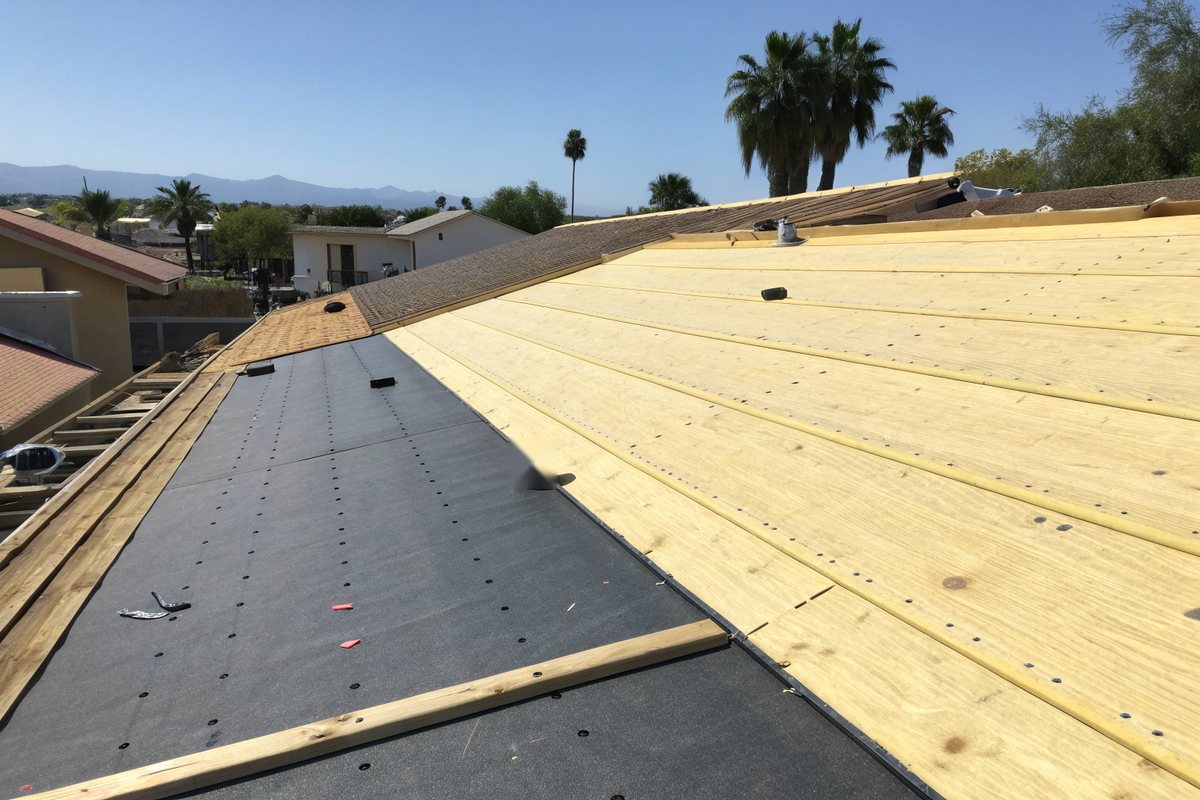
Inside Phoenix city limits, the City's 2024 building code, in effect since August 1, 2025, sets the rule. Putting back the same kind of roofing the house already had needs no building permit: tile for tile, or shingles for shingles. A tile lift and relay, with the same tiles going back over new underlayment, still counts as tile for tile.
Changing materials needs a permit; shingles to tile, which adds weight, is the clear case. So does structural roof work, with a roof framing plan for alterations. Tile to shingles, or any roof to foam, is also a change of material: treat it as a permit job and confirm with the City. At most two layers of asphalt shingles may sit over an old shingle roof. Have your roofer check with the City's Planning & Development Department (Phoenix City Hall, 200 W. Washington Street) and agree on who files.
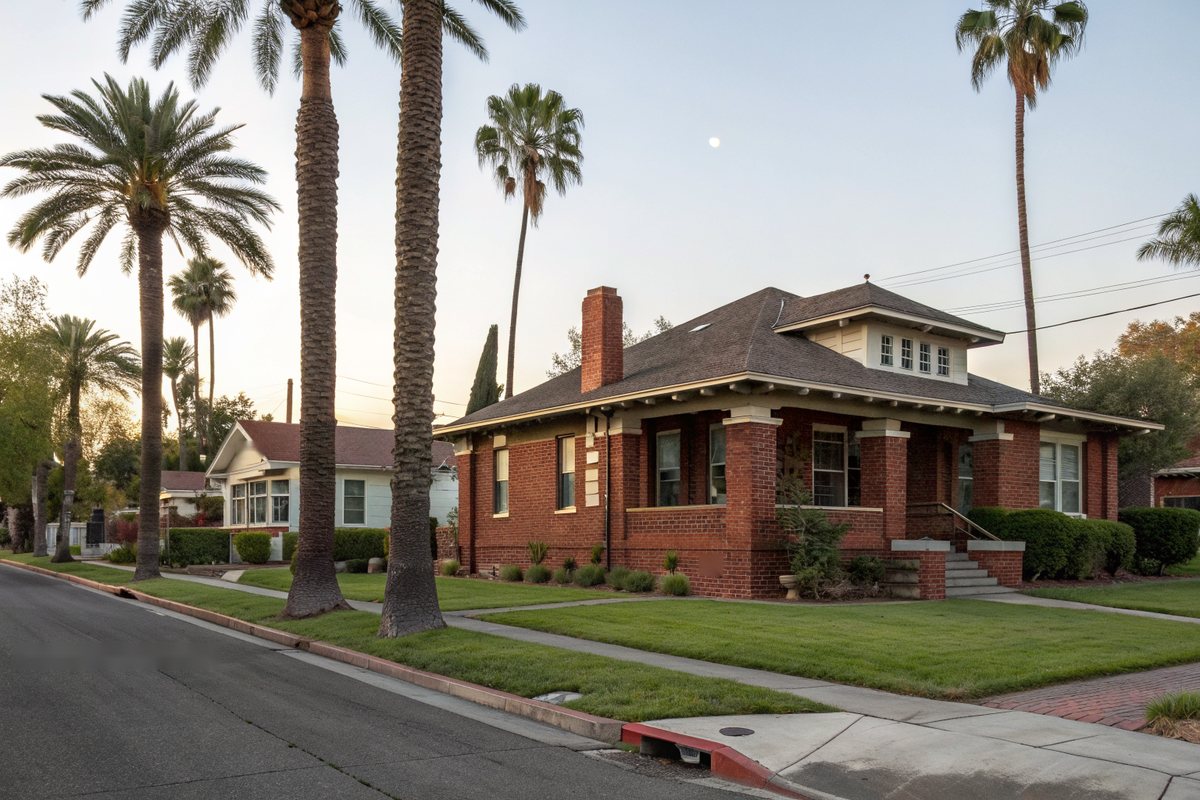
The City has 36 residential historic districts, among them Willo, Encanto-Palmcroft, Coronado, F.Q. Story and Phoenix's Roosevelt historic district. Roof work on a home there, or on the Phoenix Historic Property Register, goes through the Historic Preservation Office (HPO). Like-for-like roofing qualifies as minor work for a staff-level Certificate of No Effect; larger changes need a Certificate of Appropriateness and a public hearing. The design guidelines favor replacing roofing in kind, with no swaps between shingles and tile or metal. Talk to the HPO before the old roof comes off.
In an HOA? Check your CC&Rs and get architectural approval before changing roof color or material.
Some Glendale or Peoria mailing addresses belong to homes inside Phoenix city limits, so find out which city's building office covers yours.
- Goodyear, AZ. Its homeowner FAQs list roofing repair or replacement as permit work and say to review HOA CC&Rs first. Development Services Department, 1900 North Civic Square.
- Glendale, AZ. No re-roof rule is posted. Ask the Development Services Center, 5850 W. Glendale Ave.
- Peoria, AZ. Ask the Development and Engineering Department (online portal).
- Avondale, AZ. Ask the Building Services Division of the Development Services Department (online portal).
- Surprise, AZ. The City of Surprise Community Development Department (Building Inspections & Plan Review) takes building-code questions through a form on its website.
Questions About the Law
Do the storm-claim cancel rights cover any roof job?
No. The 72-hour and four-business-day rights cover only contracts for damage a catastrophic storm caused directly, in an insurer-designated area. Replacing a worn-out roof doesn't qualify, though a contract signed at your door may fall under the home-sale rule. Ask the roofer which rules your contract falls under.
Can a roofer talk to my insurance company for me?
On a catastrophic-storm contract, only with your permission and without charge, and never as your adjuster or negotiator. A roofer can document the damage and write up a price. Your insurer settles what the policy pays. Before you give that permission, ask what the roofer plans to discuss.
Where do I take a complaint?
Contractor complaints go to the Registrar of Contractors, policy questions to the Arizona Department of Insurance and Financial Institutions, and consumer fraud to the Arizona Attorney General's consumer protection office. Each lists how to reach it on its website. Keep your contract, receipts and photos handy when you reach out.
Source List
All read October 19, 2026. Laws change, so check the current text.
- Advertising without a license. A.R.S. § 32-1165 (azleg.gov/ars/32/01165.htm), A.R.S. § 32-1121(A)(14) (azleg.gov/ars/32/01121.htm) and the ROC's 2021 advertising notice (azroc.gov).
- Home contracts and door sales. A.R.S. § 32-1158 (azleg.gov) and A.R.S. § 44-5002 (azleg.gov/ars/44/05002.htm).
- Storm-claim contracts. SB 1206 (Laws 2026, chapter 157), which rewrote A.R.S. § 32-1158.02: azleg.gov/legtext/57leg/2r/laws/0157.htm.
- ROC guidance. License classes at roc.az.gov/license-classifications and hiring tips at roc.az.gov/before-hire.
- City of Phoenix. 2024 building code Chapter 1 amendments, plus the Historic Preservation Office's district, approvals, guideline and grant pages (phoenix.gov).
- West Valley cities. Permit and business-license pages on glendaleaz.gov, peoriaaz.gov, avondaleaz.gov, surpriseaz.gov and goodyearaz.gov.
Need the Rules Applied to Your Roof?
We explain the rules but don't give legal advice; for your own contract, talk to an Arizona attorney. To see how they apply to your house, send a request. We set up the visit, and the roofer who does the work checks the permit and historic-review needs for your address before writing the estimate. There is no cost to send a request.
Get Your EstimateTry the Cost CalculatorTake the Repair-or-Replace Quiz