Tile Roof Replacement in Phoenix, AZ
Concrete and clay tile cover a lot of homes in Phoenix, AZ, and the tile often stays sound long after the layer under it wears out. This page explains a lift and relay versus new tile, what each has cost in published figures, and how to request a visit from a local roofing pro.
Not sure if we cover your area? Check now ↓
Get Your Roof Estimate
Four short fields. We read each request and book the roof visit.
Inspections, estimates and roof work are done by an independent local roofing company. See our Referral Marketing Disclosure.
Lift and Relay or a New Tile Roof
Tile is common around Phoenix, especially on many subdivisions built from the 1980s through the 2000s. The tile sheds sun and rain well, but the underlayment beneath it is what keeps water out of the attic, and it ages faster. Roughly speaking, Arizona tile can last 40 to 75 years or more, while the underlayment often lasts about 20 to 30.
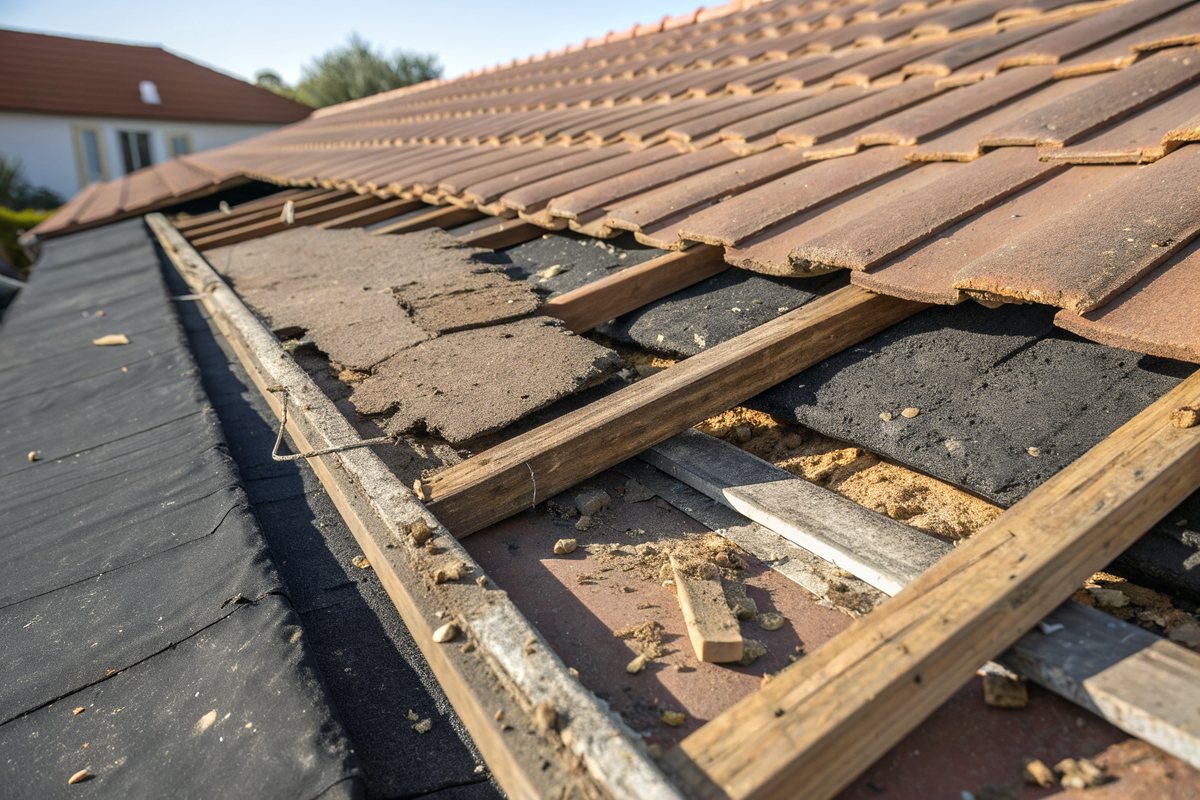
That gap is why a lift and relay exists. The roofer takes the tiles off, lays new underlayment, often a synthetic one that holds up better in heat, and sets the same tiles back, swapping out broken ones. If the tiles are brittle, cracked in many places or no longer made, new tile may be the smarter choice.
Phoenix heat is hard on that hidden layer. The city's longest run of 110°F days lasted 31 days, from June 30 to July 30, 2023 (NWS Phoenix).
When Homeowners Ask for Tile Roof Replacement
- A leak with no broken tile in sight. A ceiling stain under a tidy-looking roof often points to tired underlayment.
- Tiles shifted by monsoon wind. Strong gusts, like the August 9, 2026 storm that swept the West Valley (NWS Phoenix), can slide or crack tiles.
- Older clay tile. Clay can be fragile and hard to find in the same color, so the roofer may save sound pieces and blend in new ones.
What Moves the Price
These are published ranges from home-cost sites, not prices from us. The lift-and-relay row is a national figure, and it assumes some broken tiles get replaced.
| Cost row | Figure | Source (year) |
|---|---|---|
| Tile lift and relay (new underlayment, same tiles), per sq ft | about $3 to $5 (national) | Fixr (2025) |
| Arizona concrete tile, installed per sq ft | about $9.65 (S-profile) to $12.05 (premium) | Roof Observations (2026) |
| Arizona clay or tile roofing, per sq ft | about $14.84 | This Old House (2026) |
Broken tiles, rotted decking, a steep roof, solar panels to reset, and HOA or historic rules can all add cost. Try the cost calculator.
From Inspection to Cleanup
- The roofer's inspection. A local roofing pro lifts a few tiles to see the underlayment and checks how brittle the tile is.
- A written plan. The estimate should say lift and relay or new tile, and how broken pieces get replaced.
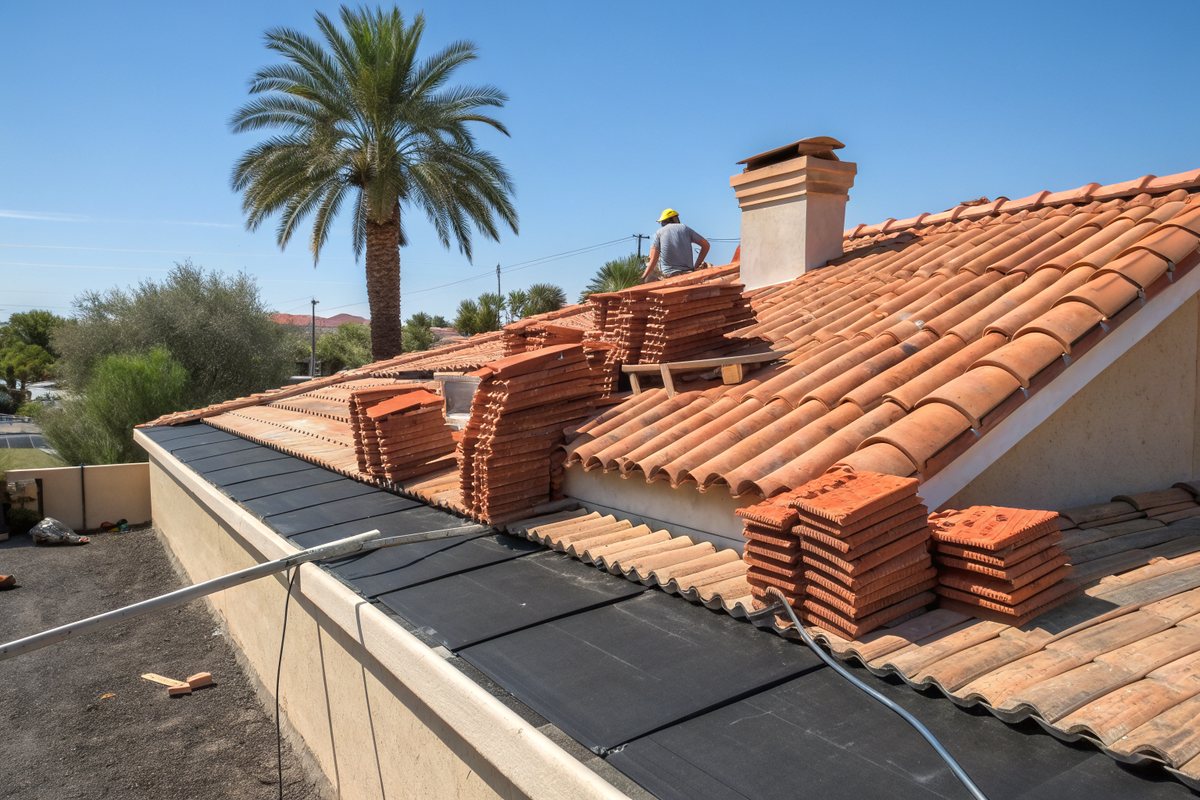
- Tiles off, old layer out. Tiles come off by hand and get stacked. Ask for photos of any soft deck boards before they are swapped.
- New underlayment, tiles back on. Flashing is renewed, the tiles return, gaps get same-color pieces, and the yard is cleared.
If solar panels are on the roof, they have to come off and go back on. Ask the roofer who handles that step.
A lift and relay keeps tile as tile, and so does trading old tile for new tile, so neither needs a City of Phoenix building permit. Going from shingles to tile is a change of material that adds real weight to the framing. It needs a permit and may bring a structural review, so the roofer should confirm with the City's Planning & Development Department and settle who files.
In Phoenix's 36 residential historic districts, the City's design guidelines favor keeping original roofing or replacing it in kind, and they advise against trading shingles for tile. Talk to the Historic Preservation Office before any tile comes off. In an HOA, the CC&Rs may set tile color and profile, so get architectural approval first.
What You Get Up Front
There is no cost to send a request. We explain the lift-and-relay choice, then set up the visit. Before you sign with the roofer, check these.
- The ROC record. Find the roofer on the Registrar of Contractors' online Contractor Search. Look for an active R-42 or CR-42 license under the same name as the contract.
- The plan in writing. The contract should say lift and relay or new tile, and how broken or missing tiles get replaced.
- Warranties and coverage. Get manufacturer and labor warranties on paper, plus proof of liability insurance and workers' comp.

Frequently Asked
Can my old tiles go back on?
Often, yes. Concrete tile that isn't cracked or crumbling can usually be lifted, stacked and reset over new underlayment, with a few spares for pieces that break. Very brittle or old clay tile may not survive the handling, and then new tile makes more sense.
Does a lift and relay need a City of Phoenix permit?
No building permit is needed, since a lift and relay keeps tile as tile. Historic homes should still talk to the Historic Preservation Office first. Outside city limits, ask that city's building office, and have your roofer say who files anything needed.
How can I tell whether it's the tile or the underlayment?
It is hard to judge from the ground. A leak with no cracked tile in view usually means water is getting past the layer underneath. Lifting a few tiles lets the roofer see it, and that tells you if a spot repair will do or the whole roof needs a lift and relay.
Can I switch from shingles to tile?
Often, but tile weighs much more, so the framing has to carry it. In the City of Phoenix it is a material change that needs a permit, and in a historic district the City's guidelines say not to make that swap. HOAs may limit the choice too.
More Roofing Options
If only a few tiles slipped, roof repair may be enough. Wind trouble is covered under storm and monsoon damage.
Get a Tile Roof Estimate
Tell us about your tile roof. We set up the visit, and a local roofing pro checks the tile and underlayment, then writes down which fix makes sense, with a price.