Monsoon Wind and Storm Roof Damage in Phoenix, AZ
In Phoenix, AZ, the storms that hurt roofs are mostly monsoon wind and dust, not hail. This page covers what wind and grit do to tile, shingles and flashing, what to note after a storm, and how a local roofing pro can check the roof once you send us a request.
Not sure if we cover your area? Check now ↓
Get Your Roof Estimate
Four short fields. We read each request and book the roof visit.
Inspections, estimates and roof work are done by an independent local roofing company. See our Referral Marketing Disclosure.
Storm Damage Is Not Always Obvious
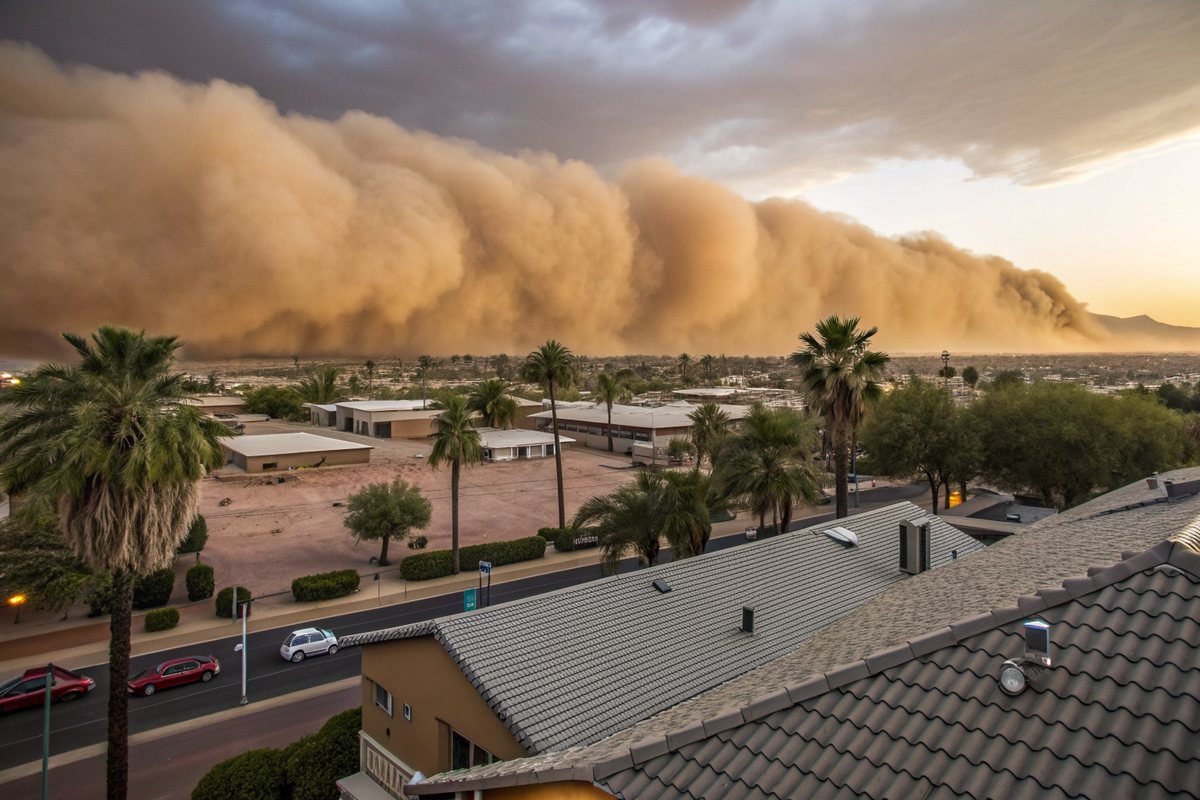
Monsoon season runs June 15 to September 30. On July 5, 2011, a dust storm with a front edge almost 100 miles wide crossed the metro in about two hours. Gusts topped 50 mph, with a few near 70 (NWS Phoenix).
On August 9, 2026, storms built near North Mountain Park in north Phoenix, then pushed southwest. Radar picked up winds near 70 to 80 mph, and the gauge at Buckeye Municipal Airport hit 73 mph. Glendale, Tolleson, Avondale, Litchfield Park, Goodyear and Buckeye were on the weather service's list of places hit, and Avondale saw the worst of it.
On September 12, 2023, a supercell born near Goodyear tracked east across the Valley with estimated gusts of 60 to 90 mph and isolated hail up to 1 to 1.5 inches. In 2024, an August 22 dust storm brought the year's top gust, 65 mph.
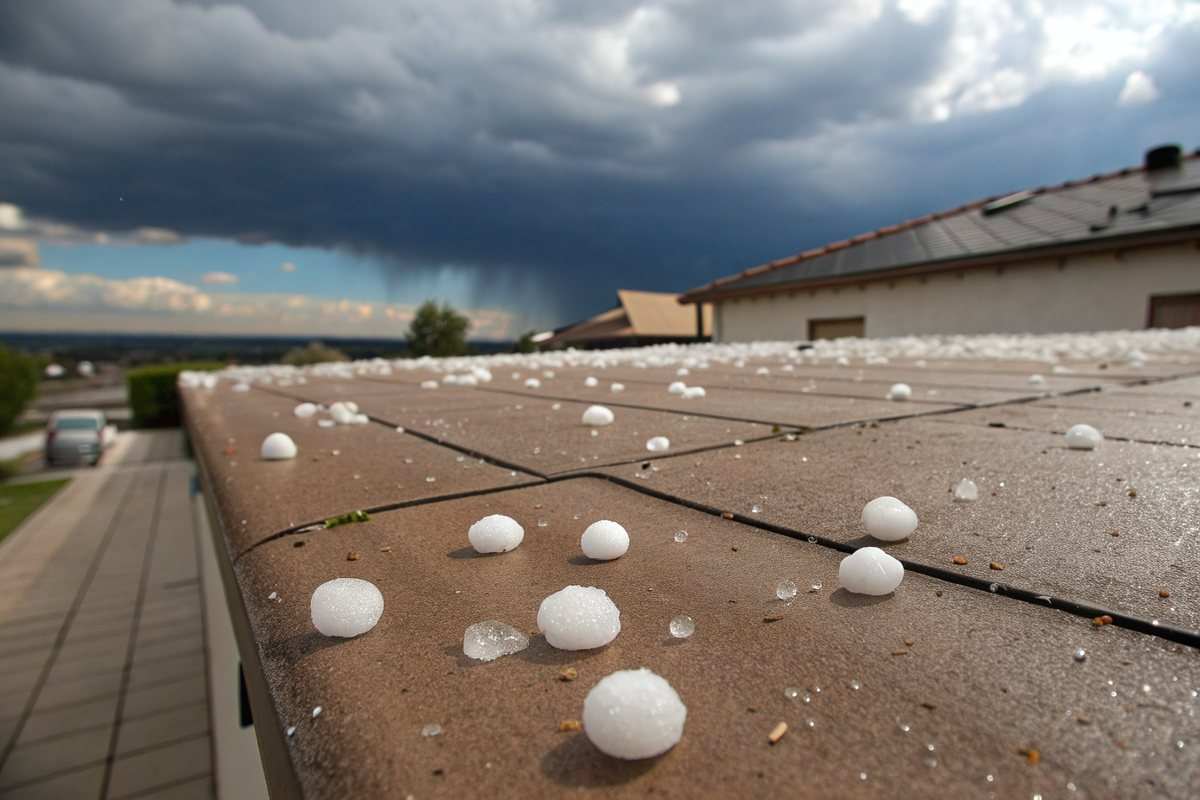
Wind damage can hide in plain sight: a tile can crack yet stay put, and grit under flashing rarely shows from the yard. Hail is rare here; the standout was October 5, 2010, when supercells crossed the Phoenix metro with stones as large as 2.50 inches (NWS Phoenix). Between storms, heat ages the roof too: Sky Harbor counted 143 days at 100°F or hotter in 2024.
When Homeowners Ask for Storm & Monsoon Damage
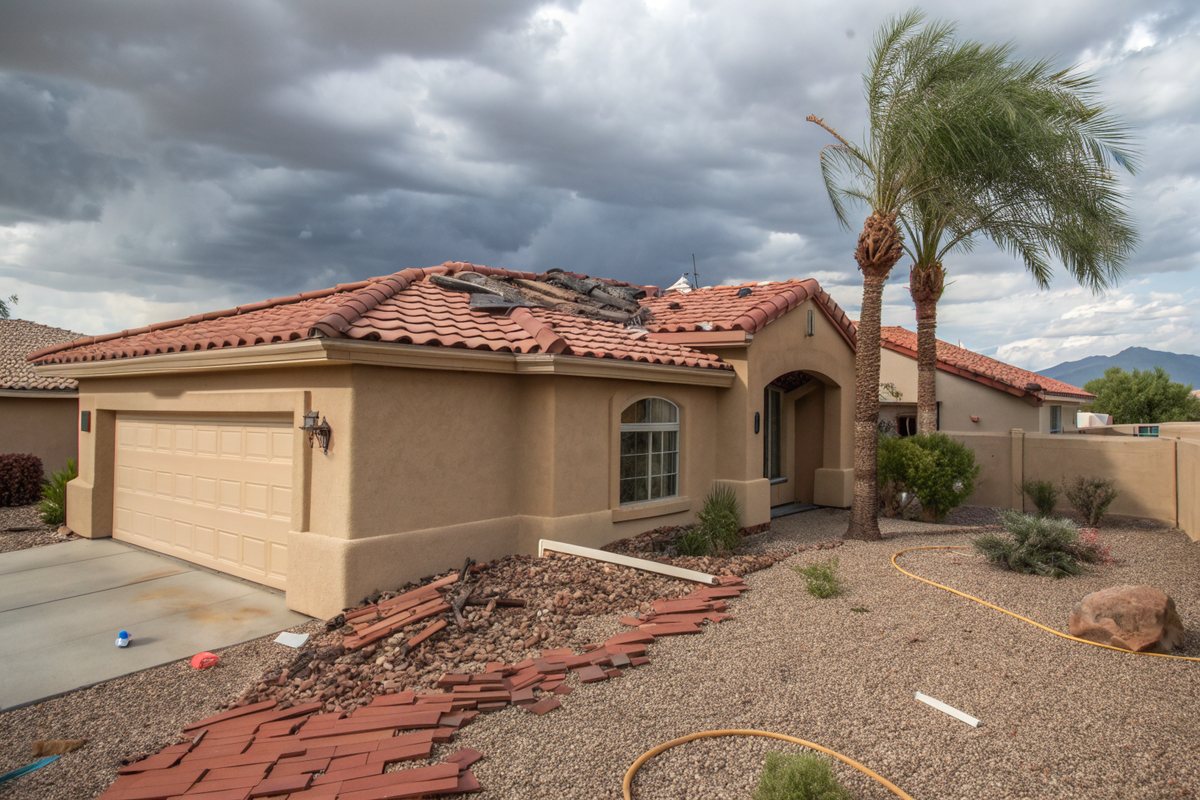
- Lifted or cracked tile. Strong gusts can work tiles loose along edges, ridges and hips, or crack them where they overlap.
- Peeled shingle edges. Wind can break the seal along a shingle's edge, then fold it back or tear it off.
- Grit under the flashing. Blowing dust can wedge under flashing at walls and vents, and the next rain finds the gap.
What Moves the Price
When storm damage is wide, these published Arizona ranges from home-cost sites give a sense of a full replacement. They are not prices from us.
| Cost row | Figure | Source (year) |
|---|---|---|
| Arizona roof replacement, whole roof average | about $7,484 (range about $5,706 to $19,407) | This Old House (2026) |
| Arizona concrete tile, installed per sq ft | about $9.65 (S-profile) to $12.05 (premium) | Roof Observations (2026) |
The roofer's written estimate sets the real figure. How your policy pays, if at all, is a question for your insurer.
From Inspection to Cleanup
- Look and take photos. From the ground, photograph broken pieces and any new stains indoors.
- Send a request. We ask about the roof and the storm, then set up the visit.
- The roofer's inspection. A local roofing pro checks the roof and photographs and measures what moved or broke.
- A written estimate. The roofer lays out a repair or a new roof. If rain is getting inside, a temporary cover may come first.
Putting the same material back after a storm needs no City of Phoenix building permit. Damage to the framing is structural and does need one; the roofer should settle who files.
Insurance, Adjusters and Paperwork
Your insurance company decides your claim. A roofer can document the damage and price the repair, and you can pass that paperwork on. We don't file claims or speak with insurers.
Arizona sets extra limits on one kind of contract: an insurance-paid job to fix roof damage that resulted directly from a catastrophic storm, where your insurer has designated the area. In that contract, the roofer can't pay, rebate or advertise your deductible, act as your adjuster, or promise the work will be covered, and you may cancel within 72 hours after your insurer denies the claim, or for any reason within four business days of signing. The Arizona roofing rules page has the details.
A sale signed at your door is different. Arizona generally lets you cancel a home solicitation sale through midnight at the close of the third business day after you sign. Policy questions can go to the state's Department of Insurance and Financial Institutions.
What You Get Up Front
You get plain answers, a request that costs nothing, and a visit at a time that suits you.
- Room to think. A temporary cover can protect the house while you weigh the estimate.
- A license you can look up. Search the roofer on the Registrar of Contractors' online Contractor Search for an active R-42 or CR-42 license.
Frequently Asked
Does Phoenix get much hail?
Not much. Monsoon storms here bring wind, dust and sudden rain far more often than ice. Hail does fall now and then, as it did on October 5, 2010, but tiles cracked or loosened by gusts are what roofers see most after a storm.
Should I get on the roof to look?
It is safer to stay down. Concrete and clay tile can break underfoot, and wet shingles are slick. Look from the yard, take dated photos of anything that fell, and leave the close-up check to the roofer during the visit.
Will the roofer handle my insurance claim?
No. A roofer can photograph, measure and price the damage, and you decide whether to share that with your insurer, which makes the decision on the claim. Under Arizona's catastrophic-storm contract rules, the roofer also can't act as your adjuster.
How soon should the roof be checked?
If rain is already getting inside, raise a temporary cover with the roofer right away. If not, there is no rush. Note the storm date, take photos, and send a request when it suits you. Nobody should push you to sign on the spot.
More Roofing Options
Small damage often fits a roof repair; wider damage may point to a full roof replacement.
Have the Roof Checked After a Storm
Tell us what the storm left behind. We set up the visit, and a local roofing pro inspects the roof and prices the fix. What happens next is up to you.